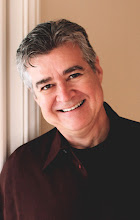
I have several indelible memories from appearing in the Mask & Bauble production of OPERATION: SIDEWINDER at Georgetown University's Stage One theater, written by Sam Shepherd with music by the Holy Modal Rounders, but only one involves a midnight run to the E.R. and a subsequent police interview.
OPERATION: SIDEWINDER was originally staged at Lincoln Center in 1970, and fellow GU student Jack Hofsiss wasted no time in garnering the rights to direct the first D.C. area production at G.U. It was an interesting piece about, among other things, the expansion of the West and the destruction of indigenous cultures who stood in the way.
(For the record, I should say that to my knowledge Shepherd’s play has no connection to the real-life Operation Sidewinder, which was later conducted in Iraq as a part of Operation Desert Scorpion in the summer of 2006, despite a parallel storyline about the expansion of the West and several other similarly psychedelic elements of the era.)
As always, our faculty advisor Donn B. Murphy, known affectionately to all his students as "DBM," encouraged us to do more, to take risks, to push the envelope, or whatever the phrase was back in the early ‘70s, to stage this experimental piece in new and unexpected ways. As undergraduates trying to make sense of our lives before we became eligible for the draft at the height of the Vietnam War, we responded wholeheartedly to his infectious enthusiasm.
So one interesting element we introduced to the production staged in the tiny theater-in-the-round named Stage One, where we were never more than 2 or 3 feet from the audience, was live snakes. Toward the end of the second act fellow cast member Paul Hume and I entered brandishing live 4-foot rat snakes for a scene depicting Shepherd’s take on a mystical Native American religious ritual.
Each evening, it was the same – the audience members chuckled when they first saw snakes coiled in our hands, thinking they were made of rubber. “Oh, look, it’s a snake! Ooh…” Once the snakes started to move, however, the mood changed in a heartbeat with a sharp intake of breath by the entire room.
One night, as Paul and I softly stepped close to the audience, undulating reptiles in our hands, a fellow sitting in front of me jerked back suddenly. My snake reared back itself, sliding off my hand. A moment before it fell free to the floor, I instinctively grabbed the snake by the end of its tail. It began whipping around like a spinning lasso as I reached for the head with my other hand.
Before I could seize it, though, the snake embedded its teeth in the webbing between my right thumb and forefinger. I jerked my hand away in reflex, but it managed to bite me twice more before I finally got a grip just behind its head.
Fortunately, Paul had moved quickly to take his snake offstage at the first hiss of trouble and place it back in its cage before returning to see how he might help. I remember that his eyes were very big as I reached out to hand him my snake—“Could you do me a favor?”—but he silently took it and disappeared quickly offstage before returning to continue the scene.
I later learned that all animal bites must by law be reported to the police. Around midnight in the hospital I was still waiting for my tetanus shot among that evenings’ casualties when a tired-looking policeman shuffled up to me, clipboard in hand.
“You the guy with the dog bite?”
The next morning I was still sleeping off the previous night’s adrenalin when the phone rang. It was a cub reporter new to his job at The Washington Post, though he tried hard to sound like it was the fourth snakebite story he’d written that week.
When the piece broke later that day, the headline was, Snake Bites GU Actor, Show Goes On and the first sentence read, “A 4-foot-long yellow rat snake starring in a Georgetown University performance of the play OPERATION: SIDEWINDER became annoyed with one of his fellow actors Saturday night and bit him three times…”
That afternoon I went to Stage One, where several other cast members were concerned that the newspaper write-up would result in the show being closed early. Jack, however, knew better. “Wait ‘til we hear from DBM,” he said.
When Donn appeared, he walked right up to me, a look of real concern on his face. “Bill, are you all right?” When I waved my bandaged hand with a sheepish smile, he said, “Thank you for holding on to that snake. If you’d dropped it in the audience, well, that wouldn’t have been good, would it?”
I shook my head in agreement. Then he flashed me that DBM smile.
“But what exciting theater that was!”
I couldn’t have felt prouder if I’d planned the whole thing.
Sunday, October 3, 2010


Tuesday, February 16, 2010
What's Your Company's Story?
As ever, a major challenge for businesses is how best to distinguish their product or service in today’s crowded marketplace. Typically, the first step is to slash prices as much as possible, the second to improve customer service. But after that, how to ensure that your product or service stands out from the crowd?
Thankfully, more companies are realizing that a memorable experience for the consumer depends on making a connection on a human level. “It’s just business” is quickly becoming an obsolete term. Of course, some companies have known that all along.
Let me tell you a story…
I’m a real Mac fan, and when I bought a new video game for my young son a short while ago and installed it on my computer, the fact that my Mac froze whenever he began to play it was a bit disconcerting.
Thinking it was a question of needing more memory, I resolved to get it, only to be told at my Mac store that my machine, bought more than 2 years ago, was too old. They no longer stocked the necessary parts for such an ancient device. “Would you like to look at a new one?”
Fortunately, my wife had heard that there was a new store in my area that specializes in Mac-authorized sales, service and support. It didn’t take long to track down Los Feliz Hi-Tech at www.losfelizhitech.com.
I quickly learned why the small, attractive store in the Los Feliz section of Los Angeles, established in November 2008, had earned an Apple Outstanding Customer Service and Support Award as well as legions of dedicated customers throughout the area.
Store owner Diego Van der Thomas greeted me right away, as he does all new customers entering his store. Diego is a classy, charming and gracious guy who hails from Buenos Aires, though he has spent many years in Los Angeles providing Mac consulting and services.
Diego is passionate about both Macs and the many local artists, photographers, writers, musicians and filmmakers with whom he has worked over the years. He immediately makes it clear that what is important to him is determining your need, then devising a solution that meets that need to your satisfaction.
In my case it turned out that the memory upgrade was only part of what was needed. Without lapsing into techno-speak, suffice it to say that Diego gave me a clear, concise explanation of the issues. He assured me that everything would work out well, then stayed in close touch with me during the next few days until the required parts arrived and were installed. He even personally transferred some files from my computer onto a disc so that I was able to continue working on another machine while my Mac was in the shop.
As always, we got to know each other by trading stories, and I learned a bit about both Diego's personal history and the satisfaction he takes in working with artists of every stripe.
Since my Mac was still under an extended warranty that covered the needed repairs, Diego was under no obligation to extend such courtesies. Yet, when I went in to pick up my computer, he had one of his technicians demonstrate how well it now works before sending me off with a smile.
Bottom line: a new life for my Mac and a memorably pleasant experience achieving it. Where do you think I’ll be buying my next Apple product?
Wednesday, December 23, 2009
What's Your Story?
In order to make sense out of anything -- analyzing the past, explaining the present, predicting the future -- the human brain relies on story.
Once, when someone at a party mentioned to me that they were not originally from Los Angeles, I asked, "When did you move here?"
A simple enough question, I thought, but I got a short autobiography in reply. The person framed their decision to move to southern California within (1) the context of the circumstances leading up to the decision to move, (2) the factors going into the timing of the move, and (3) the reason why they ended up where they did.
Far more information than I had sought, but I have to admit that I felt I had gotten to know this stranger a bit better through their story.
More evidence that a story's power lies in its emotional context.
And our strongest memories are those tied to powerfully felt emotions.
For example, I had the good fortune to drive across the country from New York to Arizona with my father at the age of eight. The memory of that trip -- nothing less than an emotion-packed, life-changing adventure for a young boy, especially when he gets to share it with his father -- is still fresh in my mind and I've always attributed my love of travel to that first journey.
And I retain what I call "snapshot memories" of specific happenings of that trip, still very clear in my mind:
* Scrambling into a darkened cave, a known outlaw hideout in the Old West, I can still see the stalactites and stalagmites in the shadowy light, still hear the drip, drip, drip of water onto the stone floor
* I can still hear the yowls of pain when seeing another young boy trip and land onto the spiny thorns of a short barrel cactus outside a motel where we had stopped
* I can still see a large, long-legged dog with half-closed eyes as he saunters up to me and displays a freshly killed Gila monster dangling from his mouth
In the last half century or so, the general sense of our society's "progress" has been largely based on technological achievements, from the moon landing to the invention of the computer, the Space Age to the Digital Age. In the process, science has seduced us with the allure of precise measurement, exactitude in a constantly changing world. As a result, facts have assumed a great importance in the Western world.
At the same time, stories have been dismissed as unimportant, even useless, yet stories remain how we transform facts into knowledge, how we give facts meaning. All explanations are stories. Stories are how we remember facts in the first place.
Oh, and Happy Holidays...
Tuesday, December 8, 2009
A "LinkedIn Thing" and an End to the Suspense
Curious thing happened a couple days ago--as usual, when I logged on to LinkedIn I was confronted with a short list of "People You May Know."
Normally, I recognize most of the people that LinkedIn proffers, though my desire to click on the "Invite" button varies. This time, however, one of the names was an Assistant Production Manager (at the time) with whom I'd worked some years ago on the four MCA/Universal productions of William Shatner's "TekWar" telefilms.
The two things I've always remembered about Deb Patz was (1) that she is one of the flat-out nicest people I had ever worked with, and (2) that she is one of the most professional, most flat-out competent Production Managers with whom I have ever worked.
Talk about a narrative--try combining "nicest" and "most competent" in a business context without crashing your hard drive.
On top of that, she's a competitive sailor and has written an important industry book, FILM PRODUCTION MANAGEMENT 101. (Learn more about it at www.debpatz.com.)
I immediately invited Deb to link up and tonight she did. Then, in a quick, brief email exchange we began to catch up about the years we've not been in touch. Communication has been restored.
We're both at that point where we measure the passage of time by comparing our children's ages, but still it feels good. We're back in touch--no small thing in this hurry-up world.
And now, an end to the suspense.
My son's team did indeed win the finals of this year's Mock Trial competition put on by the Constitutional Rights Foundation (CRF) and, out of a field of more than 40 area middle schools, has been named the County Champion.
The finals were tense, with the large courtroom in the Los Angeles Superior Court building overflowing, but the defense team came through in the end. After the trial was over (and the judge had pronounced the fictional suspect "not guilty"), the nail biting began as we had to wait nearly an hour before we were readmitted to the room, desperate to hear which team had won the last round of competition.
But first, about an hour of awards presentations--at least my son's teacher/mentor was honored with the Teacher of the Year commendation--before the CRF spokesman announced the middle school and high school countywide champions.
As you might expect, when my son's school was named the middle school champ, we all went crazy.
After a frenzied moment of howls and hugs, though, I noticed that the kids on his team were as dignified in victory as they'd been through the whole series of court cases--they each made a point of approaching the defeated team's members and offering their hands in congratulation.
Nice.
Thursday, November 26, 2009
GET YOUR STORY STRAIGHT
I'm happy to say that my son's prosecution team won three Mock Trial competitions in a row over the past month, sending the school into the final round. The original field of about 40 schools has been winnowed down to two, with the final contest to take place this Monday. The semifinals took place in one of the larger L.A. Superior Court courtrooms, as will the final round, so we know there will be no shortage of space to accommodate what we expect to be a big turnout of support for both schools.
The semifinal contest was, of course, close, but I believe what enabled our team to prevail was a solid week of practicing both objections and redirects. Objections can be voiced to probe the consistency of a witness' story, and redirects are an opportunity to repair your witness's credibility after the opposing side has tried their best to undermine it.
As such, objections and redirects are two of the most difficult weapons in a trial attorney's arsenal. They both demand an ability to react in the moment and instantly form--and articulate--a logical reaction to what has just been said. One must be able to nail the inconsistencies and immediately point them out to the judge.
Watching both sides verbally joust over the fate of the suspect in a fictional murder case, it was easily apparent that, on one level, that's what the legal system boils down to--keeping your story straight. The attorneys on both sides construct a narrative to explain a suspect's innocence (or guilt) with relation to a criminal act, and do their best to undermine the story offered by the other side.
And that is the essence of many forms of writing, as well, whether it's persuasive writing (like Op Ed pieces), traditional journalism, magazine feature articles, industry white papers, whatever.
Telling a story remains the best way to illustrate your point, report the news, explain an industry trend, or argue the need for a particular service or product.
Pardon my Shakespeare, but, "What can saying make them believe when seeing fails to persuade them?"
Subscribe to:
Posts (Atom)